

Plastic Design and Development Services
Most plastics suppliers wait for a finished drawing, then quote it. AdvancTEK works differently.
We partner with you across the full product lifecycle – concept, design, validation, production, and aftermarket support – from cradle to grave, or any stage in between.
💡
Key Takeaway
A Design Partner, Not Just a Contract Manufacturer
Plenty of shops will mold whatever you hand them.
⚠ The Risk
A design built without manufacturing input – one that’s expensive to build, hard to run, and prone to defects.
We help you avoid that. We identify the challenges you may not know you have and present options before they turn into cost:
- ✓
A different process that better fits your volume
- ✓
A part redesigned from four components down to two to cut part count and tooling investment
- ✓
A material that performs better in your application
The bottom line: That cradle-to-grave partnership is what sets AdvancTEK apart in markets used to buying commodity molding.
Tell Us About Your Project
Share a few details about your project, and our team will follow up with next steps.
“We understand the challenges you don’t necessarily know that you have, and we have the solutions. Yes, you’ll need a part, and we’ll make it like any other contract manufacturer. But the journey to get there can be a bumpy one. Let us help steer you down the right path.”
— AdvancTEK Design and Development Team
Our Design and Development Process
Every engagement follows a clear path, aligned to your internal design gates and approval process:
Our Design & Development Process
Goals, technical requirements, constraints, timeline, and budget.
Challenges and alternatives you may not have considered.
A development plan, estimate the resources required, and prepare a documented proposal.
The part, then support it through production and aftermarket.
“We’re okay with somebody coming to us with just the noun and the verb. Let us put the adjectives and adverbs, and fill in everything.”
— AdvancTEK Design and Development Team
Design for Manufacturing (DFM)
Design for manufacturing is where AdvancTEK adds the most value.
Our design for manufacturing services review a part, whether we designed it or inherited a completed design from a third party, for:
|
✓Tooling feasibility and tool life
|
✓Warpage
|
|
✓Draft
|
✓Sink marks
|
|
✓Gating
|
✓Texture
|
|
✓Knit lines
|
✓Material selection
|
|
✓Flow
|
✓Secondary operations
|
We look at every design from the processor’s and tool-builder’s perspective: the people who actually have to mold the part and stand behind the tool. That lets us:
- Catch a feature that would cause premature tool wear or failure
- Confirm a part has adequate draft for its texture requirement
- Design in locating or clocking features that simplify downstream assembly
The result is better plastic part design and plastic injection molding design.
Lower scrap, more repeatable production, and a lower piece price.
Our injection mold design services build in steel-safe conditions and cost-effective mold adjustments, so there’s room to refine the tool after the first parts come off it.
For teams that want a dedicated review, our DFM services can be engaged on an existing design before you commit to tooling.
“Some customers hire contract design services that make a bed they don’t have to sleep in – they design a ship in a bottle that’s very difficult to manufacture. That’s where we bring a lot to the table.”
— AdvancTEK Design and Development Team
Mold Flow Analysis and Injection Molding Simulation
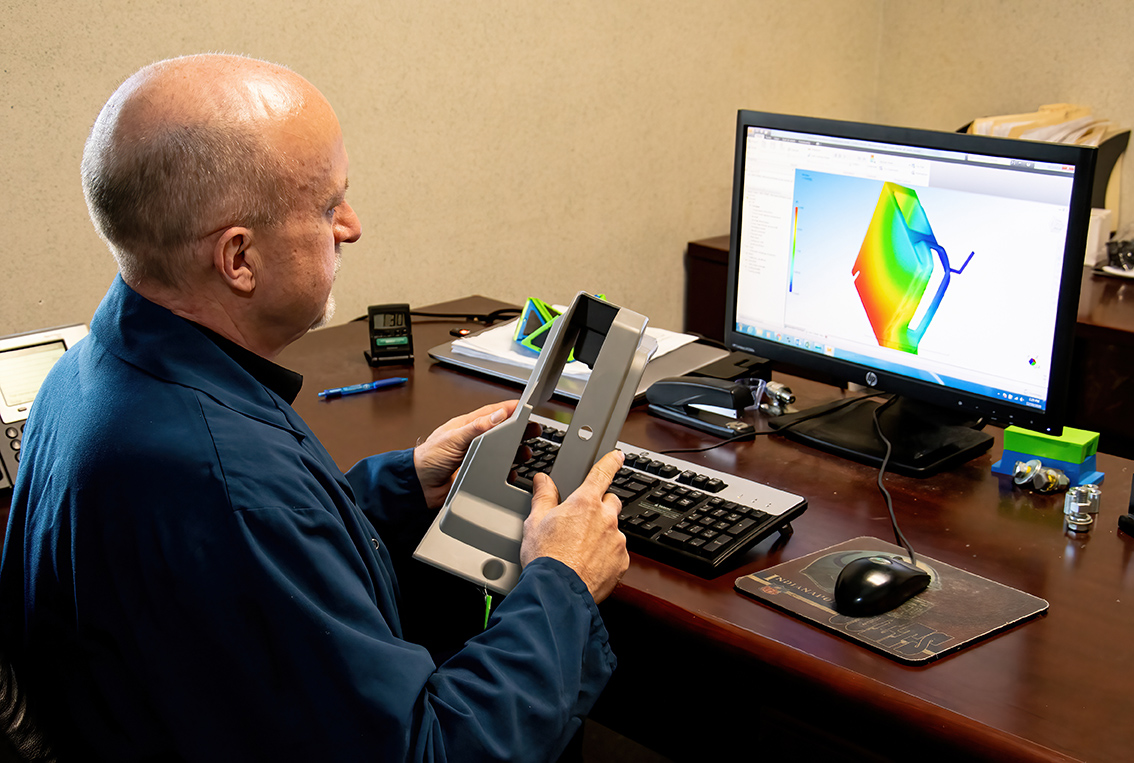
Before we commit a design to steel, we run mold flow analysis and injection molding simulation to see how the part will fill and behave. The simulations:
- Guide press tonnage, gate placement, and flow
- Flag the risk of knit lines and warpage
- Confirm the part will stay dimensionally stable instead of potato-chipping after molding
- Check rib-to-wall thickness so sink marks don’t read through to the A surface
💡Key Insight
Catching these issues in simulation – rather than after a tool is built – protects quality, repeatability, scrap rate, and piece price on every injection molding program.
Choosing the Right Molding Process
Customers often arrive set on a process simply because it’s the one they know. We look at the part’s size, geometry, appearance requirements, annual volume, and application, then recommend the process that actually fits.
| Part Profile | Process That May Fit |
|---|---|
| High-volume aesthetic part | May justify the tooling investment of injection molding |
| Lower-volume or very large part | May point to thermoforming or compression molding |
| Large, lightweight part that needs lower tooling cost | Reaction injection molding fills the gap |
Where the choice isn’t obvious, we lay out the trade-offs – tooling budget against piece price – so you can decide with the full picture.
“We may look at it and say: what if we went from designing this in four components to two, so your part count goes down, your tooling investment is better optimized, and we can lower your piece price?”
— AdvancTEK Design and Development Team
Prototyping and Prototype Tooling
For the markets AdvancTEK serves, most programs move straight into production-intent tooling rather than a separate prototype tool – it’s faster and avoids spending on a tool you won’t keep.
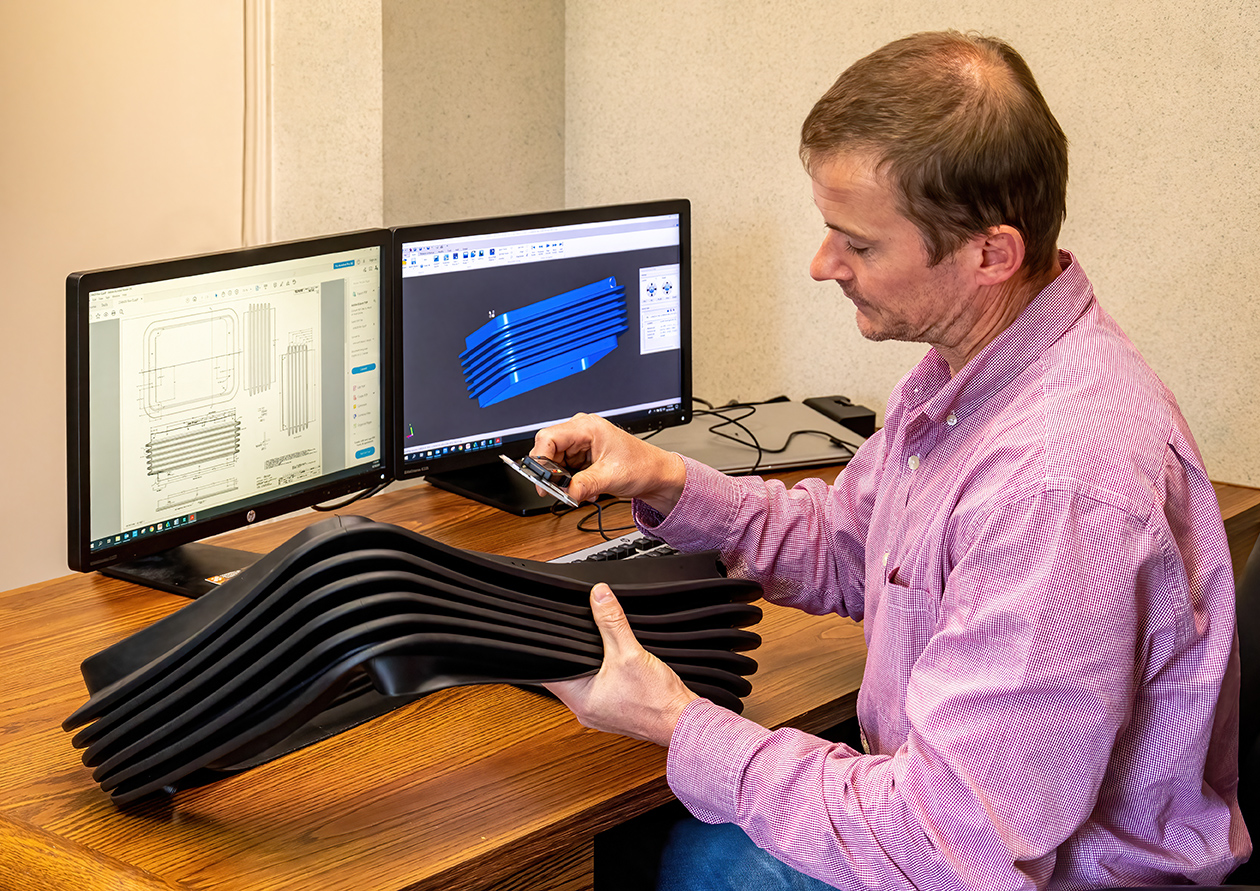
When a design needs a physical review first, 3D-printed parts handle form, fit, and function checks. We run some additive work in-house and manage specialized third-party partners for the latest printing capabilities when they can turn parts faster or at higher quality.
Prototype tooling and prototype injection molding remain an option where a program calls for it. More often, the steel-safe fail-safes we build into a production-intent tool give you the same flexibility at a fraction of the cost of a dedicated prototype tool:
- ✓
A changeable parting line
- ✓
A gate that can be revised
Part Testing and Validation
Once a part’s technical requirements are defined – by you, or by our team when we’re design-responsible – we build a design validation plan (DVP&R) around them.
Testing is matched to the application:
- UV light testing for parts exposed to sun
- Climate cycling in an environmental chamber for parts that see wide temperature swings
- Humidity and moisture analysis plus material testing for softer composites and foams
- Abrasion or stain resistance where they apply
Equally important is what we leave out.
- ✕
No over-specified materials – We won’t spec a material rated to 200 °C for a part that never sees 85 °C
- ✕
No redundant testing – We’ll often qualify a part against an already-validated resin to save the cost of redundant testing
For the full range of tests we run, see our product validation services.
“We don’t offer off-the-shelf solutions. We look at your spec and tune it to be the best-performing thing so you’re not paying for more than what you need.”
— AdvancTEK Design and Development Team
Measurement and Inspection Capabilities
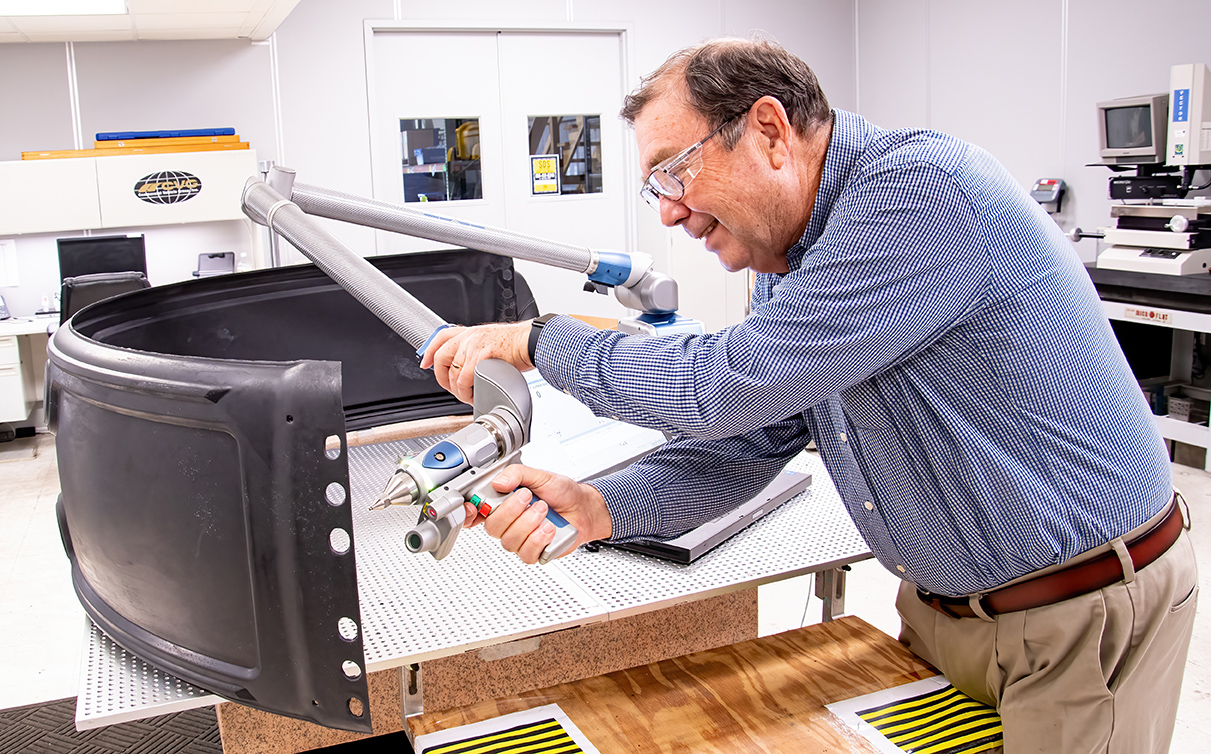
AdvancTEK verifies parts with CMM inspection services, FARO arm scanning, pull testing, and precision scales.
IATF 16949 Automotive Supplier
As an IATF 16949 automotive supplier, we document everything through APQP and PPAP, and we apply that same launch discipline to non-automotive programs.
Key insight: For markets not used to that level of process control, it means an automotive-grade measurement and documentation process at no added complexity on your end.
It also leaves a solid dimensional baseline. If a question comes up later, we can show exactly where every dimension started and confirm whether anything has changed.
Find a Way with AdvancTEK
You don’t need every detail nailed down before you reach out. Bring the idea; we’ll handle the engineering.
Schedule a meeting to see how AdvancTEK can design, develop, and build your part.
“We don’t expect you to know all the best processes. We don’t expect you to know all the materials. It’s okay to ask questions – use us to help you.”
— AdvancTEK Design and Development Team