• March 18, 2025
Last updated on May 8th, 2026
When investing in injection molding solutions, it’s important to understand what splay is and how it plays a role in the outcome of your final product. In this post, we’ll walk through what injection molding splay looks like, why it’s problematic, and solutions to avoid this defect in your injection products.
What Is Injection Molding Splay?
Splay is a cosmetic defect in injection molding that appears as silvery streaks or blemishes that resemble star bursts on the surface of a plastic part. This can affect both the appearance and the performance of the part.
Common causes for splay in injection molding include:
- Hygroscopic plastics – Plastics such as nylons or polycarbonates are hygroscopic. This means that they naturally absorb moisture from their surrounding environment, causing the plastic to degrade when brought up to heat during the manufacturing process. Because of this, these plastic types must be dried before processing to help remove the moisture.
- Overheating materials – When materials are heated, if the injection speed is excessive, or the barrel, manifold, and drop temperatures are too high, this can cause splay in injection molding.
- Improper equipment – If your equipment is not properly sized or designed for injection molding, this can create splay as well. Improperly sized nozzle tips, sprues, gates, or mold geometry can all lead to issues during the manufacturing process.
Why Is Splay in Injection Molding Problematic?
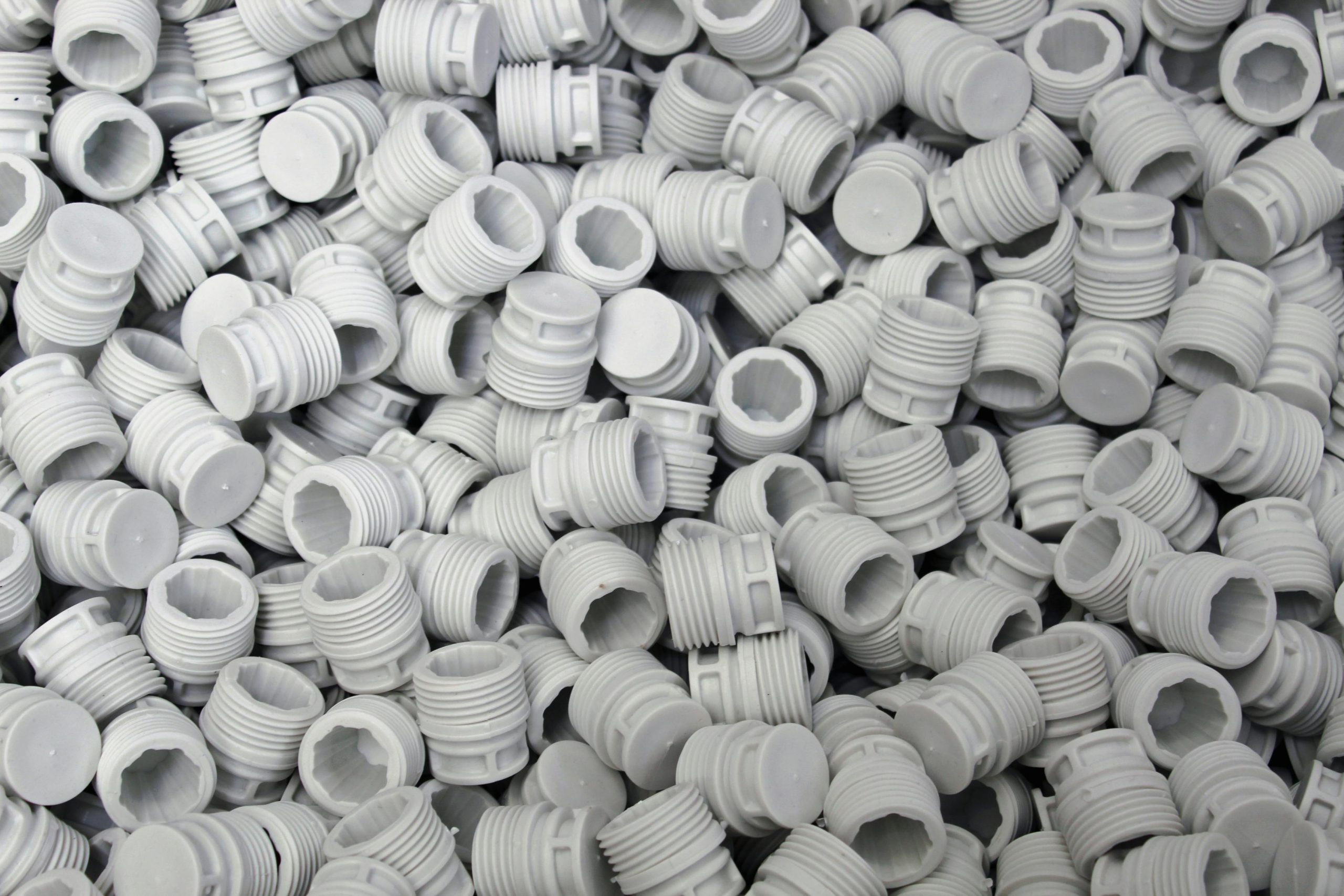
Splay can be problematic for various reasons. First, it affects the final product visually, leaving streaks across the injection molding. When trying to maintain product standards, this can be an unacceptable development, and you may be required to redo the injection molding process. This results in more time and money spent.
Additionally, injection molding splay can also cause the final product to function improperly. Specifically in hygroscopic resins, the physical properties of the resin will degrade, causing the final product to be brittle. This also causes the product to not meet quality standards.
Overall, splay is a defect that creates issues with the final injection molding product’s appearance, quality, and performance, so it’s an issue that should be avoided.
How AdvancTEK Prevents Splay
When seeking out an injection molding supplier, you’ll want to ensure that any company you choose provides you with the best quality products. AdvancTEK is a leading provider of injection molding services, and we take the necessary measures during our injection molding process to prevent splay.
Some ways we work to prevent splay in injection molding include:
- Ensuring plastics are dried
- Using non-hygroscopic plastics
- Avoiding high temperatures
- Verifying that machinery is properly sized
With our team’s focus on providing the highest quality injection molding products, you can feel confident that our injection molding parts will be free from splay and meet your expectations and standards.
Reducing the Risk of Injection Molding Splay: What to Consider During Design and Tooling
The factors above explain how splay forms once a part is in production. Many of those failure modes can be addressed before the first shot — during DFM review, tool design, and process setup.
Validating Shear Rate Against Resin Capability
Every resin has a published maximum shear rate on its data sheet. Exceed it and the polymer chains break down — volatiles and moisture flash into vapor, vent through the part surface, and leave the silver streaks recognized as splay on plastic parts.
A Moldflow or Moldex3D simulation calculates the peak shear rate the melt sees at every point in the runner and gate system, then compares that figure against the resin’s limit. If a simulation flags 46,000 1/s through a gate when the resin tolerates 50,000, the design is technically within spec but has no buffer for fill rate variation, color concentrate, or regrind — a redesign trigger, not a pass. Undersized gates, sharp sprue-to-runner transitions, and aggressive injection velocity all push shear past the limit and produce splay marks injection molding teams then troubleshoot under deadline.
Gating Variables to Hold in View
Gating drives shear rate, fill pattern, and cosmetics simultaneously. When gating a part for injection molding:
- Resin type — viscosity, shear sensitivity, moisture behavior
- Color — masterbatch carriers can introduce volatiles that show up as plastic splay
- Wall thickness — gate thickness ≈ 80% of nominal wall
- EAU — production volume drives hot-manifold vs. cold-runner economics
- Machine size — press tonnage and shot capacity shape runner layout
- Aesthetics — vestige and gate witness often govern placement before flow
- De-gating — manual, automatic, or self-degating each calls for a different gate
- Cost of resin and tooling — high-value resins favor hot runners; EAU decides payback
Runner System and Part Geometry
Splay in plastic injection molding often traces to the flow path itself. Sharp features in the part or runner create stress and turbulence the melt cannot recover from before the gate.
- Runner geometry: remove sharp transitions across sprue, runner, and gate to keep flow laminar
- Runner size: undersized runners raise pressure drop and resin stress — ample cross-section is cheap insurance
- Gates per part volume: gate count must match resin shear capability against shot volume
- Fill pressure: keeping fill pressure at or below 10,000 PSI prevents the stress that produces a splay defect injection molding programs see at the press
- Wall transitions: smooth abrupt steps in wall thickness to stabilize the flow front
- Sharp inside corners: add a radius wherever the design allows
- Complex features: speaker grills, vents, and deep engravings generate turbulent flow that produces splay and jetting. When the feature cannot be removed, position the gate so melt flow starts furthest from it — the last point of fill should land just after the busy feature finishes
- Venting: identify last-fill points and gas traps during DFM and place vents accordingly; trapped gas produces a splay plastic defect no process adjustment can remove
Splay is most economically solved upstream — analysis hours during DFM cost a fraction of cutting steel twice.
Why You Should Choose AdvancTEK
At AdvancTEK, we work to bring your ideas to life, as we offer design and development services that deliver custom solutions. If you have a design in mind, you can bring it to our team, and we’ll work closely with you to produce the product you’re looking for.
We also work with a variety of industries, putting our more than 35 years of experience to use in providing injection molding solutions. These include fields such as:
- Industrial
- Medical
- Battery and energy storage
- Telecommunications
- Powersports and recreation
- Construction and agriculture
As you attempt to avoid splay in injection molding and acquire the best quality products, AdvancTEK is your manufacturer of choice with extensive industry experience.
Avoid Splay Injection in Molding with AdvancTEK Today
If you’re searching for a reliable manufacturer who provides high-quality injection moldings, contact us today to get started on your next project.